
The UK’s Premier Conference for High Performance Computing and Associated Research
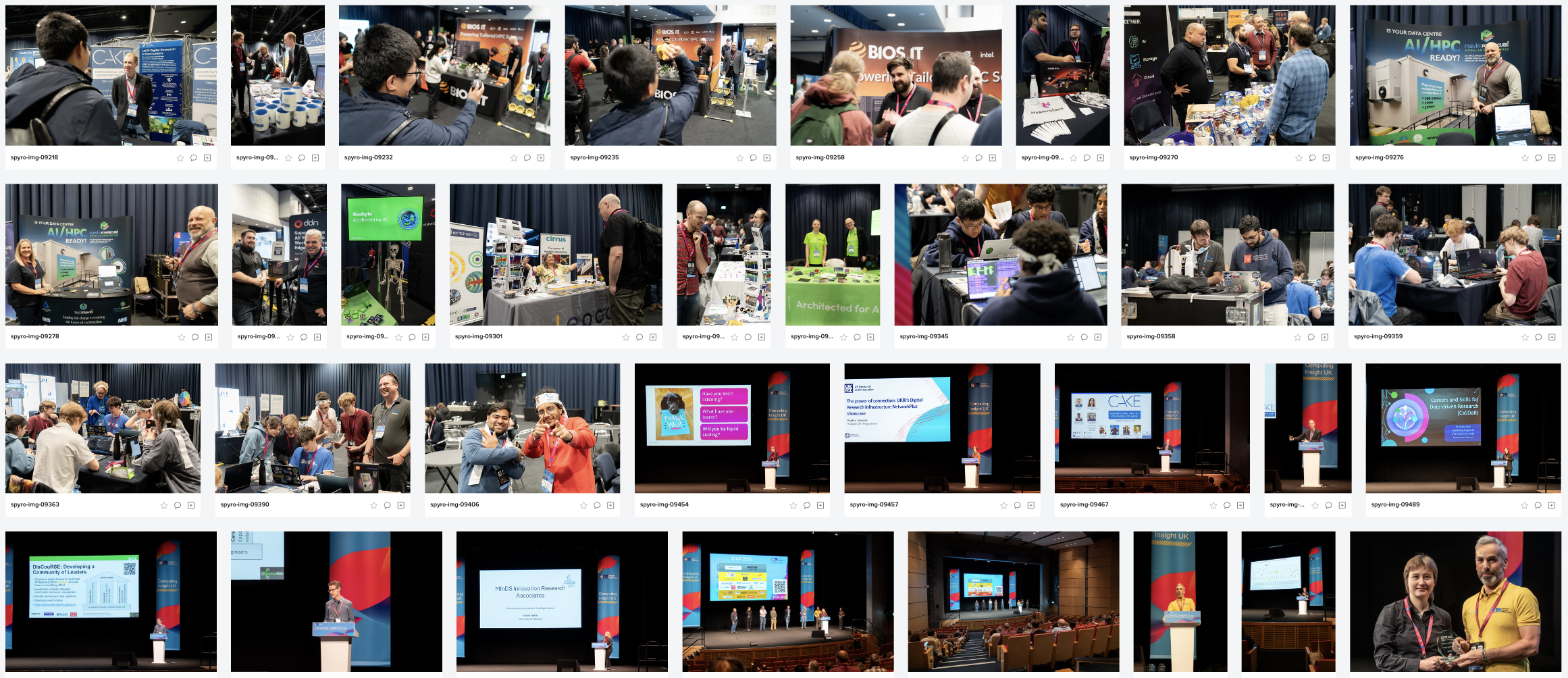
CIUK 2025 photo gallery now available to view…



Computing Insight UK 2025 (CIUK 2025) took place at Manchester Central Convention Complex on Thursday 4 and Friday 5 December 2025. The theme for the conference was Computing Unites.
The conference included two full days of presentations about high performance computing and associated science and research, alongside the CIUK exhibition with fifty exhibitors showcasing the latest hardware and software releases. A series of parallel breakout sessions explored the latest “hot topics” and include some relevant user group meetings. We welcomed students and early career researchers competing in the CIUK Cluster Challenge and poster competition.
As with previous years CIUK 2025 will also included some “Day Zero” activities that took place on Wednesday 3 December before the official conference began This included the annual CoSeC Conference highlighting the collaborative work of the CoSeC programme.
To stay up to date with all of the CIUK latest news please follow us on LinkedIn and subscribe to our mailing list.
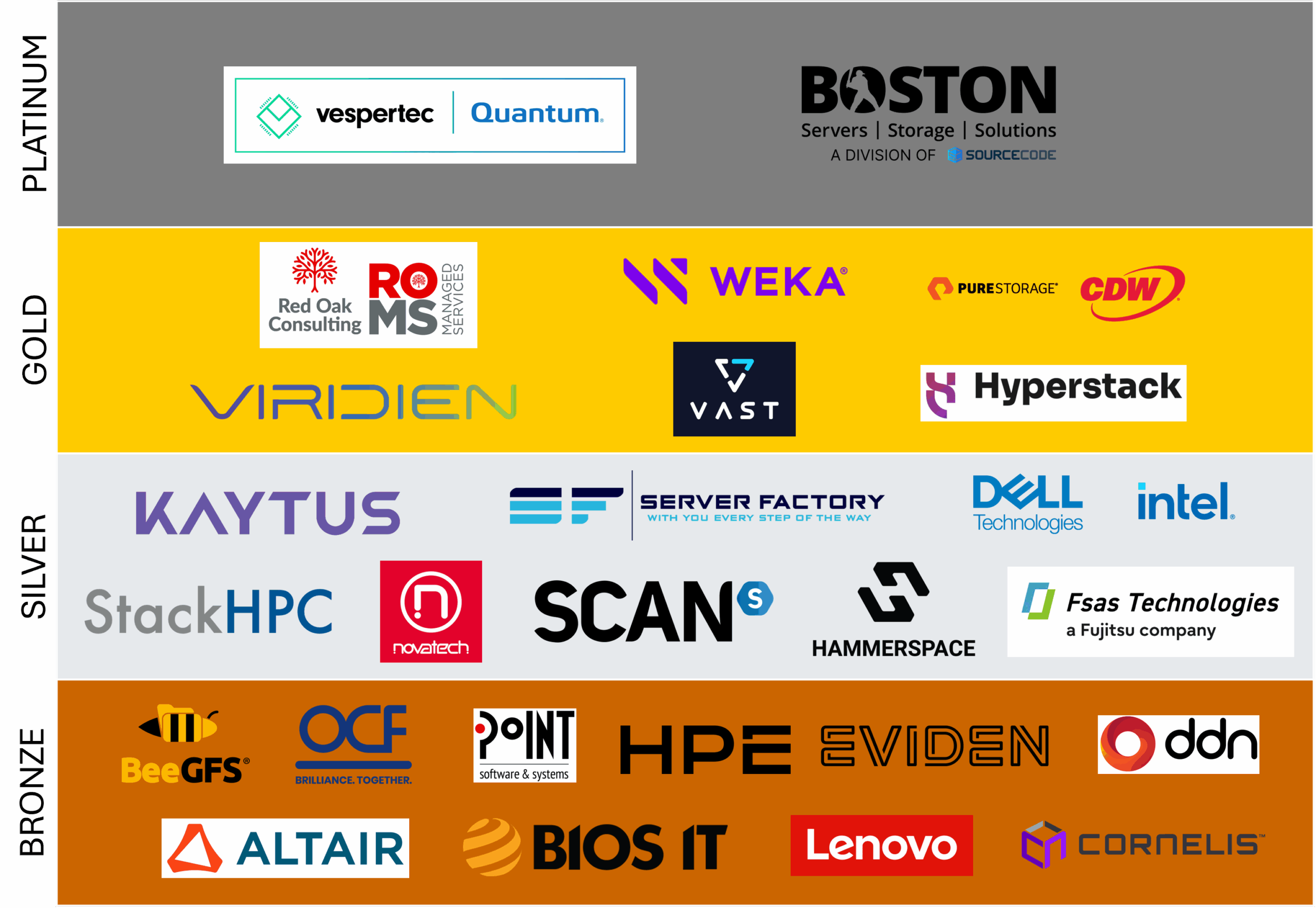
To see the CIUK 2025 sponsors click the image

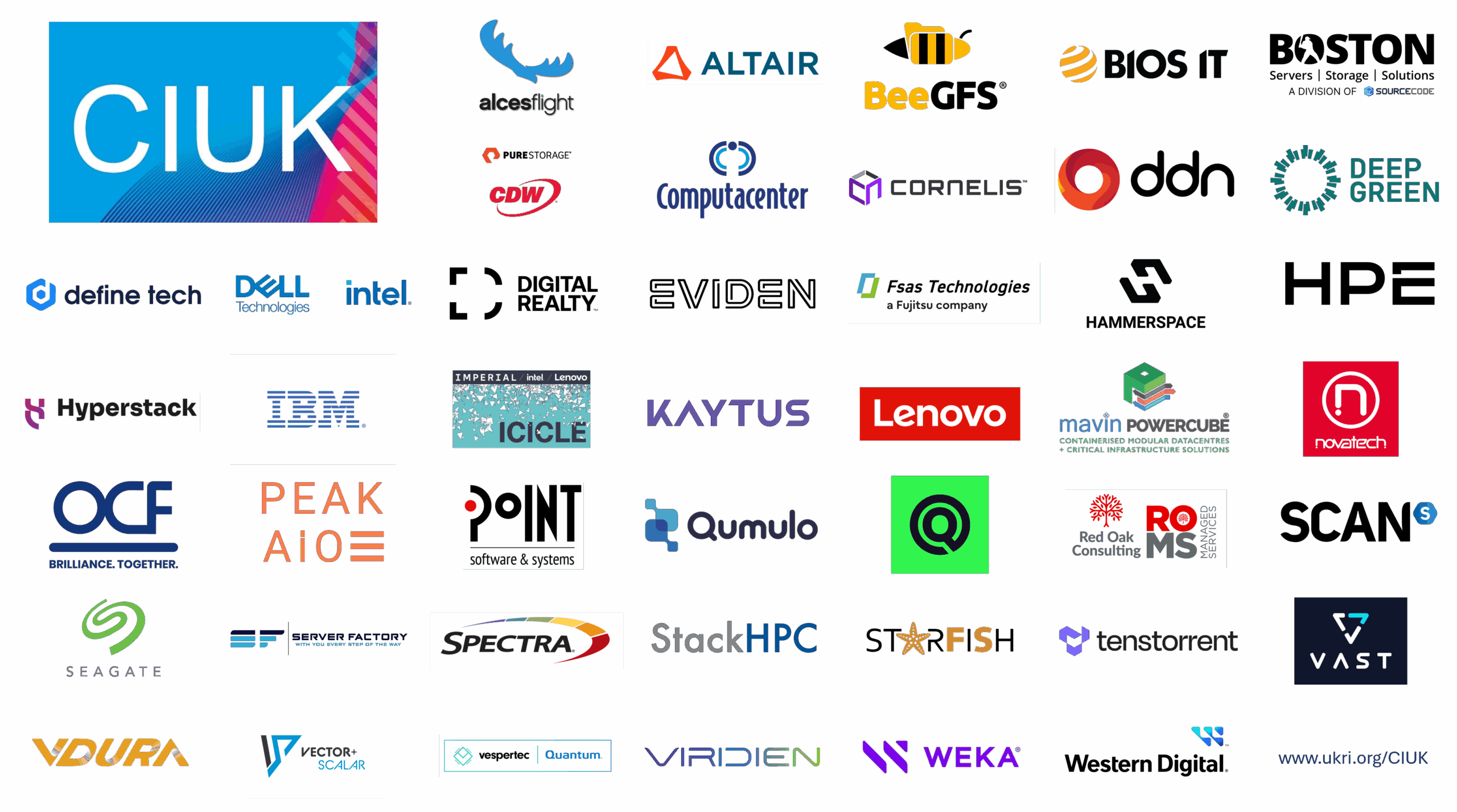
To see a full list of registered exhibitors please click the image
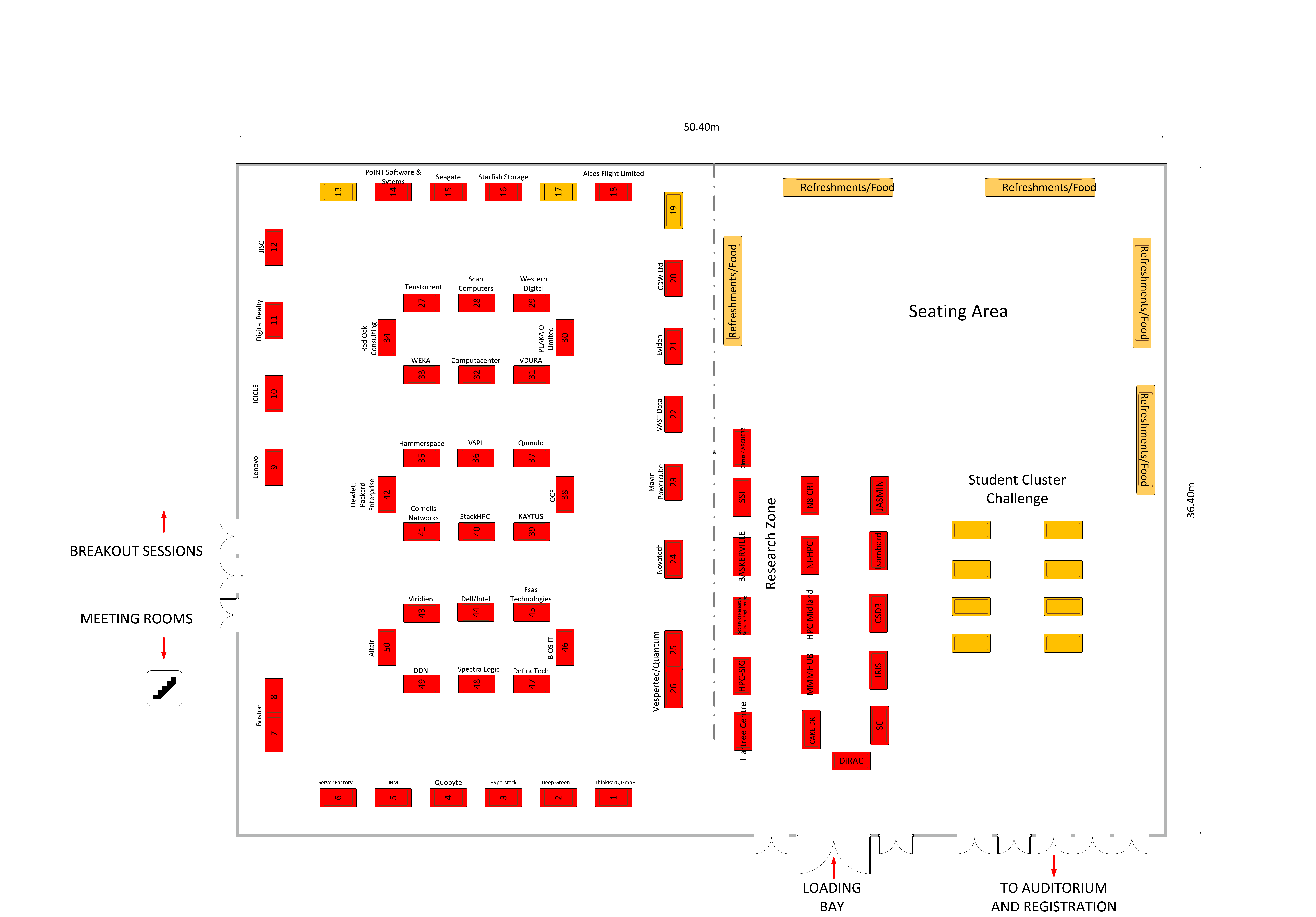
To see the CIUK 2025 floor plan click the image
CIUK 2025 Programme
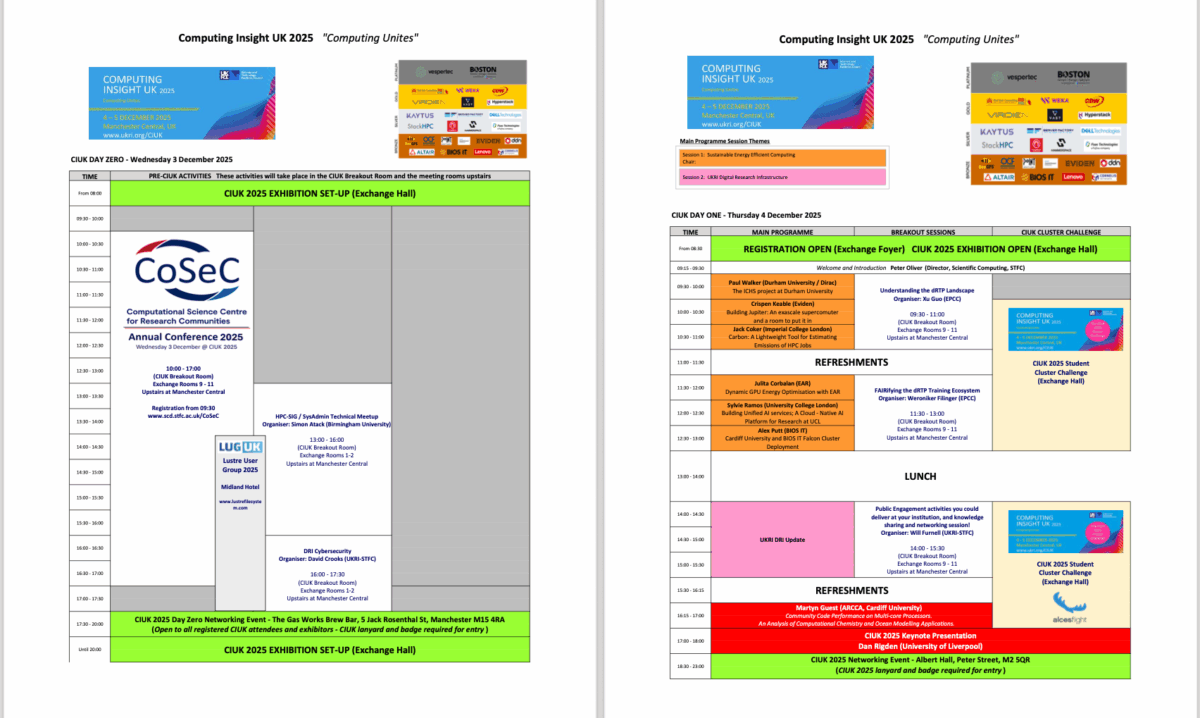
The programme for CIUK 2025 is available to download here.
CIUK 2025 Keynote Presentation
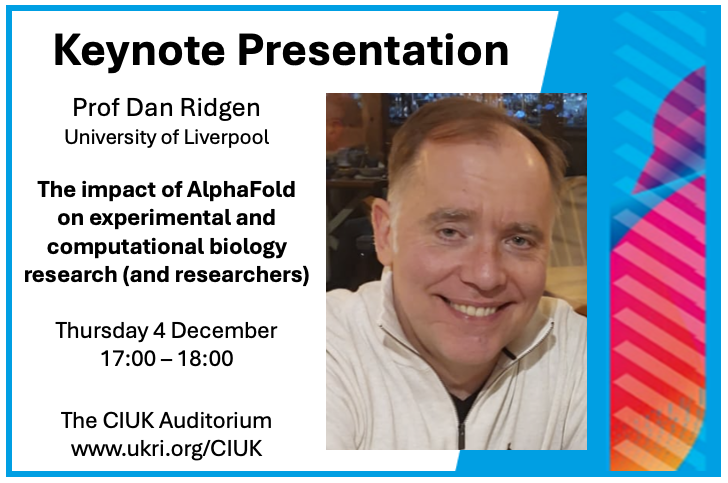
Abstract: AlphaFold is a ground-breaking deep learning-based method for prediction of the structure of proteins and biomolecular systems. Its development exemplifies how the patient acquisition of high-quality data, in this case archived by the PDB, can enable disruptive scientific innovation. The landscape of protein structure research, both experimental and computational, changed rapidly with the arrival of AlphaFold; some approaches and workflows have become largely obsolete, while other areas have seen more intense efforts and rapid progress, often using methods inspired by AlphaFold. This talk will try to present an overview and comparison of biology pre- and post-Alphafold, with an emphasis on the role of UK research communities and scientific computation.
Bio: Dan trained as a Biochemist in Oxford then dabbled in protein structure modelling in its infancy during a PhD in Edinburgh. Time in Leeds and Brasilia was spent doing protein X-ray crystallography alongside bioinformatics, but increasingly gravitating towards the latter. He returned to the UK in 2003 to take up a position as Lecturer in Bioinformatics at the University of Liverpool and has been there ever since. Much of that time has been spent considering how bioinformatics innovations can be translated to benefit communities of experimental structural biologists, especially protein crystallographers through ties with CCP4. Latterly this has entailed adapting to the many opportunities and occasional challenges of the post-AlphaFold world.
CIUK 2025 Day Zero
Due to the success of previous years we will be, once again, including a pre-CIUK Day Zero on Wednesday 3 December in the programme for CIUK 2025. Events included on Day Zero are included in your registration fees unless indicated otherwise.
The main event on CIUK 2025 Day Zero will be the annual CoSeC Conference. This event will take place in Exchange Room 9-11, upstairs at Manchester Central and will start at 10:00. Full details can be found on their website.
We will also be including two breakout sessions on Day Zero. Both of these sessions will take place in Exchange Rooms 1-2, upstairs in Manchester Central…
- The first session will be the annual HPC-SIG / SysAdmin Technical Meetup, organised by Simon Atack (Birmingham University). This session will run from 13:00-16:00.
- The second session will be a “DRI Cybersecurity” session organised by David Crooks (UKRI-STFC). This session will run from 16:00-17:30.
Running alongside the CIUK 2025 Day Zero activities, we are also happy to support the Lustre UK User Group. This annual meeting that is traditionally run in conjunction with CIUK will take place in the Midland Hotel, adjacent to Manchester Central, starting at 13:00. Please note: separate registration is required for this event via the LUG UK website.
CIUK 2025 Breakout Sessions
- Understanding the dRTP Landscape – Thursday 4th December – 9:30-11:00
- FAIRifying the dRTP Training Ecosystem – Thursday 4th December – 11:30-13:00
- Public Engagement activities you could deliver at your institution, and knowledge sharing and networking session! – Thursday 4th December – 14:00-15:30
- Women in HPC Breakfast – Friday 5th December – 8:30-10:30
We are delighted to have organised the 4th annual WHPC breakfast at CIUK 2025! The popular event took place on the 5th of December between 8:30 and 10:30. Bringing the HPC community together for:
- Inspiring early-career tech talks
- Introductions to the UK’s WHPC Chapter & Affiliate community
- Networking with peers and colleagues
- A relaxed start to the day with breakfast provided
For more information click here.
- GPFS User Group CIUK 2025 – Friday 5th December – 11:30-13:30
- From ExCALIBUR to DRI, linking the UK’s compute programmes – Friday 5th December – 14:00-16:00
CIUK 2025 Cluster Challenge
A NEW LOOK CLUSTER CHALLENGE FOR CIUK 2025… over recent years we have seen
massive growth in the CIUK cluster challenge. From 3 teams in our fi rst competition to 16 teams last year the challenge is proving to be very popular amongst university students. We once again broke our own record in 2025 with 17 teams entering the competition. We
have now become victims of our own success, and the previous format of the competition is no longer sustainable. So, for 2025 we made some positive changes…
The CIUK 2025 Cluster Challenge saw the introduction of an online qualifying round. We partnered with three Universities – The University of Edinburgh, University College London and Durham University. These Universities hosted a series of online challenges
for the teams. Team members were also required to complete the ARCHER2 driving test before commencing the challenges.
At the conclusion of these online challenges the top 8 teams qualifi ed to attend CIUK 2025 at Manchester Central in December, with all travel and accommodation costs covered by CIUK. Once at CIUK 2025 the qualifi ed teams completed a series of in-person challenges working with our partner companies Alces Flight and OCF to crown the overall
CIUK2025 Cluster Challenge Champions.
At the conclusion of the in-person challenges Beariables from Birmingham University were crowned as the CIUK 2025 Cluster Challenge Champions and will now go forward to represent CIUK in the online version of the ISC’26 cluster challenge competition in June 2026.
Congratulations to all of the teams that took part in this competition, and a sincere thank you to our partners at the University of Edinburgh, University College London, Durham University, Alces Flight and OCF for all the time and eƯort you put into supporting the
challenges.
CIUK 2025 Jacky Pallas Memorial Award
In 2019 we lost an incredibly important member of the CIUK Scientific Advisory Committee with the sudden and unexpected passing of Jacky Pallas at the age of just 54. Jacky was head of e-Research at King’s College London and for the previous three years had been an active and vocal member of the CIUK Scientific Advisory Committee, helping to shape the direction our event has taken and pushing through many positive changes, whilst championing diversity and the inclusion of young researchers.
In her memory, and in recognition of her passion for our conference, we introduced an annual award that will highlight the high impact work of an early career researcher and will allow the award winner a slot in the main programme at CIUK. Researchers will be nominated by their supervisors and we are looking for nominations that highlight the impact of a project that early career researchers have been working on, or have completed.

We are very proud to announce the winner of the 2025 award is Flaviano Della Pia from the University of Cambridge, Yusuf Hamied Department of Chemistry.
Flaviano is from Naples, Italy, where he graduated in Condensed Matter Physics. He recently completed his PhD in Computational Chemistry at the University of Cambridge, where his work explored theoretical and computational approaches to understanding materials and molecular systems.
Computational modelling plays a central role in molecular crystal discovery, fundamental to a wide range of applications, including pharmaceuticals and renewable energy. However, a reliable description of these systems requires both a high-accuracy description of the potential energy surface and a fully anharmonic hashtag#quantum description of the hashtag#nuclear motion. [1,2] In this talk, Flaviano will first show that reliable lattice energies can be obtained with quantum diffusion hashtag#MonteCarlo. [3,4] Then, he will demonstrate the generation of machine learning interatomic potentials capable of describing molecular crystals at finite temperature and pressure with sub-chemical accuracy, using as few as ∼ 200 data structures, an order of magnitude improvement over the current state-of-the-art. [5] The
models successfully reproduce experiments for a diverse range of molecular crystals and open up the prospects of reliable modeling for drug discovery and beyond.
[1] G. J. O. Beran, Chem. Rev. 2016, 116, 9, 5567–5613 (2016)
[2] V. Kapil and E. A. Engel, Proc. Natl. Acad. Sci. U.S.A. 119 (6) e2111769119 (2022)
[3] F. Della Pia, A. Zen, D. Alfè, A. Michaelides, J. Chem. Phys. 157, 134701 (2022)
[4] F. Della Pia, A. Zen, D. Alfè, A. Michaelides, Phys. Rev. Lett. 133, 046401 (2024)
[5] F. Della Pia, B. X. Shi, V. Kapil, A. Zen, D. Alfè, A. Michaelides,Chem. Sci., 16, 11419-11433 (2025)
Previous winners – and their presentations at CIUK – can be viewed here.
CIUK 2025 Poster Competition
The theme for CIUK 2025 conference was Computing Unites with sub-themes including The Power of Community, Sustainable, Energy-Efficient Computing, Engaging with Industry and Cyber Security. Topics of interest also include, but are not limited to, all forms of advances in high performance computing, storage, networking, big data analysis, quantum computing, and software development.
CIUK 2025 Poster Competition Winner
Larisa Dorman-Gajic
UK Atomic Energy Authority
Fusion of Talent: Celebrating the Many Roles of Women in Computing
The perception that programming is an inherently masculine profession is a fairly recent phenomenon. Originally computing was seen as feminised clerical work. Until the 1960s, computers were often women hand-calculating processes. When the first computing machines
were created in the 1940s, such as Colossus at Bletchley Park and ENAIC in the USA, women
were the ones programming them. Today, only an estimated 20% of the UK technology workforce are women [1].
In the 1960s, the role of computing started to gain prestige. Around that time aptitude and personality tests began arising to get a job as a programmer. These tests largely favoured a masculine personality. Still, in the USA and Western Europe the number of women in
computing rose to 38% in 1987 before declining for the rest for the 20th century. Even in the recent years, there has been a sharp decrease in girls choosing to do GCSE in computer science, from 43% in 2015 to 21% in 2023 [2].
On 4th November 2025, a one-day inaugural event was hosted by the UK Atomic Energy Authority’s Computing Division bringing together women, underrepresented genders, and allies from across the computing community [3]. The aim of the event was to build community within underrepresented demographics from across academia, research, and industry; to connect, share experiences, and celebrate diversity in technology.
The importance of events like these is underscored by the Lovelace Report 2025 [1], which found that each year 40,000-60,000 women leave UK tech roles. This highlights systemic issues that persist in computing; starting with stereotyping from a young age causing fewer women to join computing in the first place, followed by the exodus of women during their mid-career.
With the event’s main goal being that of building community, the day started with a networking
breakfast and had a combined 2-hour poster and lunch break encouraging open discussion and
connection. Moreover, there were multiple inspirational speakers from various computing backgrounds and careers stages. The day ended on a panel discussion on the barriers for women in computing, giving a platform to the attendees’ questions and concerns. The event showcased how diversity is not peripheral to innovation but fundamental to it. The success of this initiative underscores that inclusion and connection are critical to sustaining the future of computing.
In this poster, we reflect on the event, including lessons learnt on how one can help women and
other minorities within computing to feel more welcome. We talk about various ways you can help within your institution and point to other organisations helping women and girls get into computing. The poster will highlight the importance of these events in building a safer and
better working environment for everyone.
References
[1] The Ada Lovelace Report https://www.oliverwyman.com/content/dam/oliver-
wyman/v2/publications/2025/jul/value-keeping-women-in-tech-lovelace-report.pdf
[2] The Future of Computing Education https://www.kcl.ac.uk/ecs/assets/kcl-scari-
computing.pdf
[3] Women in Computing Event
https://indico.ukaea.uk/event/532/timetable/#20251104.detailed
CIUK 2025 Research Zone
The CIUK 2025 Research Zone allowed all EPSRC Tier-2 Centres, and other sites with significant size computing facilities, the opportunity to join the CIUK exhibition and update attendees on their progress.
CIUK 2025 Research Zone: